Confrontation and Caring

Full article here.

“In fact, talking to our [family] about the things they’ve done to upset us is one of the best ways for us to discover who they really are. If our [family] are compassionate and responsive to what we tell them and are willing to change the problematic behaviors, it’s proof that they truly care about us.

“If, on the other hand, they deny what they’ve done, get angry at us for bringing it up, or tell us that we’re over-reacting [trifecta!], this demonstrates that they aren’t willing or able to negotiate the relationship in good faith. Confrontation, for this reason, is an ideal way of distinguishing between our real and false [family].

The only relationships at risk from confrontation are the ones not worth maintaining.”

Capture

There’s A Name For It

In the 4 years or so that I have been working on this family’s problem — researching, learning about relationships and what can go wrong with them, trying to find the truth of things or at least exposing the biases — I have often had the experience of coming across a new word or phrase that perfectly describes something that happened in my FOO.  And every time, I think, “There it is.  It has a name.

Names are important.  Their existence shows that these things do happen, and they happen regularly, and they happen to other people, other families, as well as ours.

We are not “special”.  Our family’s story is not some weird anomaly that can’t possibly be understood by anyone else — it is in fact very well understood, and it is pathological.  It is not some unique form of “normal” that can only be understood, in Joe’s words, by someone who knows the “history of the family and personalities involved”.

If the story that’s being told can’t stand up to impartial, outside scrutiny, it’s not normal.  (But abused children often think abuse is “normal”, because abuse is all they know.)

Not only do these things happen — they are known to have harmful, lasting effects.  I am speaking of narcissism and NPD, parentification, parental alienation, blame-shifting, invalidation, scapegoating — just to name a few of my new words.  Narcissism and blame-shifting are known to be damaging to relationships.  Scapegoats are known to be the ones who seek out the truth.  Parental alienation is destructive to a child who naturally wants to love both parents.  Invalidation disrespects and destroys a person and a relationship.

Parentification often happens to the oldest child – especially if they are the same sex as the parent who is abdicating their proper role – and “The adultified child takes on responsibilities in the hope that it will hold the family together by keeping mom and dad around.

My siblings manage to ignore all this information, or explain it away somehow.  I don’t know how most of them do it;  there is one brother who simply insists that I am wrong about practically everything I write.

Which leads me to another term I learned in all of this:  “cognitive dissonance is the mental stress or discomfort experienced by an individual who… is confronted by new information that conflicts with existing beliefs, ideas, or values,” and that one of the four methods of dissonance reduction, and probably the simplest, is to “Ignore or deny any information that conflicts with existing beliefs.”

Ta-da.  There it is.  It has a name.


Anyway, the point is, I’ve learned about a lot of concepts that definitely do exist, that are studied and well understood, and that explain most, if not all, of what happened in my FOO.

Up until now, though, I never had a word for what happened to me the morning after my father died, when Joe and Susan attacked me for daring to complain about Susan’s inappropriate behavior the night before — other than that I found out it is called a narcissistic rage attack, which explains what they did, but not what I experienced as a result.

Neither of my therapists diagnosed me with anything very specific.  “Therapeutic services” was the billing code the second, better and more experienced one, used.

Adjustment disorder” was the billing code used by the first one — who I went to for grief counseling, and who I think was not familiar with NPD, and the complicated family problems I presented as a result.

“Adjustment disorder is a group of symptoms… that can occur after you go through a stressful life event… Your reaction is stronger than expected for the type of event that occurred.”

I still remember how she was as mystified as I was, the day she exclaimed, “But you’re not even allowed to defend yourself!”  Knowing what I know now, it is clear that what I was going through was more than just normal grief over the loss of my parents — and to someone who did not understand NPD and its effects on others, of course it would appear that my reaction was stronger than expected.


It is obvious that the initial experience was traumatic.  There was, of course, the death of the only real, caring parent I had.  Then being yelled at, at the top of their lungs, inches from my face, less than 12 hours after the death of my father, by two members of what was supposed to be a family, who all claimed before the fact that they were going to be supportive, especially of me – pretty damned traumatizing, I should think.

And then the aftermath, where they lied to everyone else, blamed me, threw me under the bus, and no one thought twice about what might have really happened – also pretty damned traumatizing.

And finally, that last reunion – when I was physically ignored, yelled at again, and began to understand just how the rest of the family actually viewed the whole incident.  Up until then, I had thought that they knew what really happened, but chose to simply sweep it under the rug for Joe & Susan’s benefit.  (That would have been bad and unhealthy, sure — but it would also have been “normal” in the context of our family and the ever-present hierarchy of age.)

I didn’t realize until then that Joe and Susan had lied about what happened, and that they all believed those lies:  they believed that I had started it, deliberately picked a fight, that I was entirely to blame for it, and that they in fact believed they were being rather magnanimous in not holding my supposed behavior against me!  Rather traumatizing to not only have the original incident thrown back in my face, but to realize that their view of it, and me, was even worse than I had thought.

So, for a while, I looked at the idea of PTSD.  I found out there is something called “complex PTSD“, which is quite different from “classic” PTSD.  “Situations include… psychological manipulation (gaslighting and/or false accusations)… Forms of trauma associated with C-PTSD… [include] emotional abuse…repeated or prolonged traumas in which there is an actual or perceived inability for the victim to escape.”

That had some commonalities with what I had experienced, and for a while I wondered if I had been a whole lot more screwed up than I realized, by the early separations from my mother, and her neglect and disinterest — but it didn’t quite fit.  PTSD is a fear-based reaction, and I’m not afraid.

Now, I think I’ve found it.  It even fits in with PTSD, in a way, but it is different.  By reading about PTSD and soldiers and veterans, I learned about moral injury.


Depending on who you ask, this idea is either new or old.  “It’s a new term but not a new concept.  Moral injury is as timeless as war — going back to when Ajax thrust himself upon his sword on the shores of Troy…

Yet the term, and the idea, is very new, at least in the treatment of PTSD and other mental health issues of soldiers and veterans.  Most of the work I have found on this is written in this context (probably because the military is where there’s plenty of funding, and by the nature of the beast they are at least somewhat focused on mental health).

One definition is “perpetrating, failing to prevent, bearing witness to, or learning about acts that transgress deeply held moral beliefs and expectations.”  However, this definition doesn’t take into account the effects on the person who actually experienced the act.

Another definition doesn’t rule it out:  Like psychological trauma, moral injury… describes extreme and unprecedented life experience including the harmful aftermath of exposure to such events. Events are considered morally injurious if they “transgress deeply held moral beliefs and expectations.” Thus, the key precondition for moral injury is an act of transgression, which shatters moral and ethical expectations that are rooted in religious or spiritual beliefs, or culture-based, organizational, and group-based rules about fairness, the value of life, and so forth.”

Moral injury is … a sense that their fundamental understanding of right and wrong has been violated, and the grief, numbness or guilt that often ensues.

“…the pain that results from damage to a person’s moral foundation... Moral injuries… have to do with failing to hold yourself or others to account.

“…[people] can be morally injured by the transgression of peers and leaders who betray expectations in egregious ways.

One expert is a Dr. Shay, who introduced the clinical concept.  And his definition is that moral injury can happen when “there is a betrayal of what’s right by someone who holds legitimate authority in a high-stakes situation.”  Bingo.

Dr. Shay also talks of “authority perceived as violating what is “right” or “fair,” keeping in mind the extreme dependence combat Veterans have upon one another for survival.”  Well, when I was very young, and my mother was hospitalized, I learned on some level that I had to depend on these people for survival.

Finally, this definition actually includes a potential victim:  …“moral injury” refers to the emotional and spiritual impact of participating in, witnessing, and/or being victimized by actions and behaviors which violate a [person’s] core moral values and behavioral expectations of self or others.

What happened the night my father died, and the day after, pretty much blew away the concept I had had of my “family” as a group of decent, healthy, moral people who could hold it together and maintain a reasonable amount of self-control in a time of crisis.

I never thought they were people who would treat a family member the way they treated me:  screaming at me, leaning down to shout directly in my face, with the accompanying threat of physical violence implied by that invasion of personal space.

Or, if they had been triggered by that crisis, and did behave so badly, they would own up to it, apologize, and try to make amends.  They would be honest, responsible adults.

I never thought that my “family” were people who would ignore what I politely asked for in a time of crisis.  That they were people who would deliberately lie about another family member to cover up their transgressions.

And what happened at and after the 2012 reunion destroyed the idea that my “family” would at least TRY to step up and do the right thing in a difficult situation.

That was when I found out that whatever else they might do in other situations, whatever else they might be capable of, however moral and decent they may be in other facets of their lives — they won’t do it for me.

That was when I figured out that I didn’t have a “family”.  At least, not one that was healthy enough to give me the respect, love, and acceptance that I was asking for.  My FOO was one where, when I asked for these things, instead I was ignored, invalidated, or criticized.  Maybe it is a functional family among the “right” people; I wouldn’t know, because I’m not in that club.  What I know is that it is a group of people who are incapable of doing the right thing for my sake.  I’m not important enough to them.

disruption in an individual’s confidence and expectations about one’s own or others’ motivation or capacity to behave in a just and ethical manner

Moral injury does not, by its nature, present itself immediately. Some will experience questions of moral injury days after an incident; for many others, difficulties will not surface for years.

“Moral injury usually stems from a precise moment in a [person’s] experience… It’s about reconciling that event that sticks with you… And it’s also about reconnecting with a moral community, feeling connected to your fellow man.

Between those two experiences — that day in 2000, when my dad died, and that day in 2012, at the reunion — I lost my whole experience of “family”, the people I was connected to by blood, that I had been connected to for my entire life.

Two dozen people, gone from my life.

“Transgressions can arise from… the behavior of othersAn act of serious transgression that is at odds with core ethical and moral beliefs is called moral injuryBetrayal on either a personal or an organizational level can also act as a precipitant.”

It’s not a mental illness or failure to cope:

“Distinct from pathology, moral injury is a normal human response to an abnormal event.

It is the loss of trust:

“Both flavors of moral injury impair and sometimes destroy the capacity for trust. When social trust is destroyed, it is replaced by the settled expectancy of harm, exploitation, and humiliation from others.

In my case, I got the reality first, and now I have the settled expectation.

I got the reality of being treated like shit at the worst time in my whole young life, by the one group of people in your whole life that you’re always, ALWAYS supposed to be able to count on, for anything, any time, anywhere.  The ones who were older and supposed to be oh-so-much wiser.

And, I got the reality that there wasn’t anything I could do about it.

“With this expectancy, there are few options: strike first; withdraw and isolate oneself from others (e.g., Achilles); or create deceptions, distractions, false identities, and narratives to spoil the aim of what is expected (e.g., Odysseus).”

I tried the latter option — to “get over it” — hiding my pain from the wrongs done to me, censoring my feelings, my thoughts, my opinions, my beliefs, in order to “fit in” and not do damage to the “family”.

To accept the act of Susan violently, viciously vomiting her psychological shit all over me RIGHT AFTER THE DEATH OF MY FATHER — traumatizing me, leaving me to deal with it for years and years — and to pretend that it never happened — so that she, and everyone else, can also pretend that it never happened (or if it did happen, it was my fault) and she can pretend that she’s still perfectly perfect.

Never mind that it DID happen.  Never mind what it did to me.  Never mind that if she gets to be perfect, what’s left for me to be is only the flaws.

I was supposed to allow them to continue to treat me as second-class, as a scapegoat, as if my feelings and my pain and my trauma and my humiliation didn’t matter as much as hers.  When it was MY father who had died – MINE.

What is misunderstood is that if this is what the group needs me to do in order to not sustain damage, it’s already really, really fucked up.

After realizing this painful truth, I finally chose the other option, to get away from the toxic people, and the ones I no longer trust, the ones who consider themselves above wrongdoing, the ones who are so very perfect that they would never humble themselves so far as to apologize to ME.

Because to the special arrogance of the Triumvirate, that would be unbelievably humiliating.

And finally, one bullet point that sums up most of what I have felt about this for the past 4 years:

“Emotional responses may include… Anger about betrayal-based moral injuries.”

It feels so good to finally have a name for it.


Even better, it feels GREAT to discover that I’ve been doing all the right things, in terms of healing myself.

Not ignoring a problem usually helps, and this one is no exception.  Also trying to understand what happened, analyzing it, looking at evidence.  Guess what I’ve been doing?

“People mostly try to push those experiences away and not look at them, and they inevitably end up with an oversimplified conclusion about what it all meant,” he said. “We’re trying to get them to unearth the beliefs that are causing their distress, and then help them analyze it, consider the evidence…therapists focus on helping morally injured patients accept that wrong was done [though not by me!], but that it need not define their lives.”

And then there’s this idea:

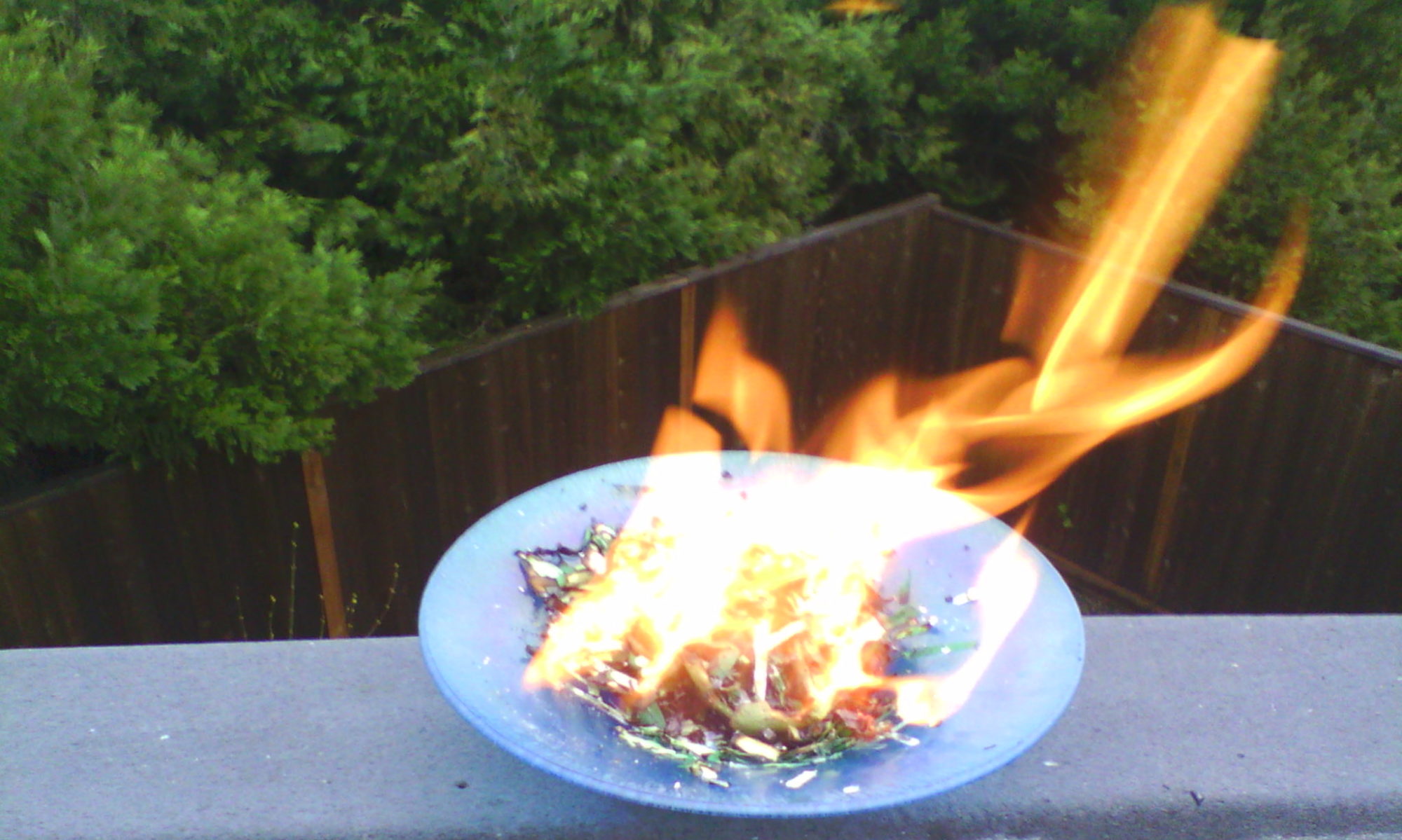
IMG_20160120_162242“…some have devised makeshift rituals of cleansingAt the end of a brutal 12-month combat tour in Iraq, one battalion chaplain gathered the troops and handed out slips of paper. He asked the soldiers to jot down everything they were sorry for, ashamed of, angry about or regretted. The papers went into a makeshift stone baptismal font, and as the soldiers stood silently in a circle, the papers burned to ash.

“It was sort of a ritual of forgiveness,” said the chaplain, Lt. Col. Doug Etter of the Pennsylvania National Guard. “The idea was to leave all the most troubling things behind in Iraq.”

And, I knew that I needed to write this blog.

“Dr. Shay places special importance on communication through artistic means of expression. Moral injury can only be absolved when “the trauma survivor… [is] permitted and empowered to voice his or her experience…”

“We favor the tenet that “treatment” of moral injury must be defined by the individual according to their beliefs and needs. Outlets for acknowledging and confronting moral injury include talk therapy, religious dialogue, art, writing, discussion & talking circles, spiritual gatherings, and more.”


Of course, it’s still a bit of a mixed bag.  For one thing, it has occurred to me that at least part of what the rest of my FOO is doing is actively avoiding EXACTLY THE SAME MORAL INJURY that I received.

Those cowards don’t want to believe that Joe and Susan could really, truly have done what Joe and Susan did.  They don’t want me to describe it:

 Imagine what it felt like to see Susan’s horrible, ugly, angry face two inches from my own, bending down so she could scream right at me, to feel her spittle on my face, to wonder if she was going to physically attack me, to hear the shouts from both of them ringing in my ears — their words just so much angry, hateful noise, because both of them were shouting nonstop, at the same time.

And she lost her shit like that over the idea that I had dared to criticize her selfish behavior of the night before, when she refused to do something I asked for right after my father died.

I didn’t want to believe it either.  The difference is, I don’t have the luxury of not believing it, and I don’t have to imagine what it was like, because I’m the one they did it to.  (And my husband witnessed it, and he has some moral injury from it too, you fucking bastards, because he feels like he ought to have done something to stop it.)

And I didn’t want to believe that they could lie like they did, and that everyone would believe them like they did.

This would be bad enough on its own – but now add that this was only hours after I watched my beloved father die, and then sat by his dead body, waiting for the ambulance to take him away, all the while forced to listen to her LOUDLY LAUGHING AND JOKING WITH A STRANGER IN A ROOM WITH A CORPSE.

This is in stunningly bad taste no matter how you slice it.

And this was after I even specifically and politely asked them to go somewhere else with their jolly conversation.

Yet, in the presence of that obscene behavior, that outright disrespect and provocation, I STILL managed not to scream at her, not to get up in her face and shout and spit and threaten.  I certainly FELT like it, but I controlled myself.  Because you just don’t do that shit to people.  Not if you are a decent person.

Good thing it happened to the strong scapegoat, I suppose, because having lived through the past few years, if I’m truly the strong one then I don’t know what the hell it would do to any of them.

And, this is never going to happen:  at least, I’m not going to get it from my FOO.

“…moral injury affects, and is affected by the moral codes across a community [in this case, a family]… moral injury stems in part from feelings of isolation from [the family]. Moral injury, then, is a burden carried by very few, until the “outsiders” become aware of, and interested in sharing it.

Finally, this quote was written in terms of therapy, but it works on another level with my own story.

…by and large, those with moral injury are on their own.

Capture

More on Blind Tribalism

The Cook and the Chef: Musk’s Secret Sauce

“But the Us in blind tribalism is creepy. In blind tribalism, the tribe’s guiding dogma doubles as the identity of the tribe members, and the Us factor enforces that concept. Conscious tribe members reach conclusions—blind tribe members are conclusions. With a blind Us, if the way you are as an individual happens to contain opinions, traits, or principles that fall outside the outer edges of the dogma walls, they will need to be shed—or things will get ugly. By challenging the dogma of your tribe, you’re challenging both the sense of certainty the tribe members gain their strength from and the clear lines of identity they rely on.

“The best friend of a blind Us is a nemesis Us—Them. Nothing unites Us like a collectively hated anti-Us, and the blind tribe is usually defined almost as much by hating the dogma of Them as it is by abiding by the dogma of Us.

And if there isn’t a Them around anymore — perhaps because he has just died — they will find a new Them to attack.  The one that was associated most strongly with the old one, perhaps.

“Whatever element of rigid, identity-encompassing blindness is present in your own tribal life will reveal itself when you dare to validate any part of the rival Them dogma.

“Give it a try. The next time you’re with a member of a tribe you’re a part of, express a change of heart that aligns you on a certain topic with whoever your tribe considers to be Them. If you’re a religious Christian, tell people at church you’re not sure anymore that there’s a God. If you’re an artist in Boulder, explain at the next dinner party that you think global warming might actually be a liberal hoax. If you’re an Iraqi, tell your family that you’re feeling pro-Israel lately. If you and your husband are staunch Republicans, tell him you’re coming around on Obamacare. If you’re from Boston, tell your friends you’re pulling for the Yankees this year because you like their current group of players.

If you’re me, try saying that your reality is that Mom was selfish, lazy, neglectful, and disinterested, but Dad really loved you.  That Joe & Susan were shitty, and they should feel bad about what they did, and apologize.  Try saying that you don’t want kids to your family and your MIL.

“If you’re in a tribe with a blind mentality of total certainty, you’ll probably see a look of horror. It won’t just seem wrong, it’ll seem like heresy. They might get angry, they might passionately try to convince you otherwise, they might cut off the conversation—but there will be no open-minded conversation. And because identity is so intertwined with beliefs in blind tribalism, the person actually might feel less close to you afterwards. Because for rigidly tribal people, a shared dogma plays a more important role in their close relationships than they might recognize…

“As far as society is concerned, when you give something a try—on the values front, the fashion front, the religious front, the career front—you’ve branded yourself. And since people like to simplify people in order to make sense of things in their own head, the tribe around you reinforces your brand by putting you in a clearly-labeled, oversimplified box.

“What this all amounts to is that it becomes very painful to change. Changing is icky for someone whose identity will have to change along with it. And others don’t make things any easier. Blind tribe members don’t like when other tribe members change—it confuses them, it forces them to readjust the info in their heads, and it threatens the simplicity of their tribal certainty. So attempts to evolve are often met with opposition or mockery or anger.

But without change there is no possible growth, personal or otherwise.

“…when you are the experiment, negative feedback isn’t a piece of new, helpful information—it’s an insult. And it hurts. And it makes you mad. And because changing feels impossible, there’s not much good that feedback can do anyway—it’s like giving parents negative feedback on the name of their one-month-old child.

Which basically explains why nothing I’ve ever said has been taken on board by anyone.

“…they were “trapped in their own history.

“…Being trapped in your history means you don’t know how to change, you’ve forgotten how to innovate, and you’re stuck in the identity box the world has put you in.

More confirmation that mostly, I’ve made the right choices:  to be myself, to speak what I believe to be the truth, and to rid myself of a whole litany of dogmas:  Catholicism, mother-worship, career choices, patriarchal thinking.  Phew.

The price has been what it was always going to be.  It’s a steep price tag, but it’s been worth it.

Capture

Helpless, Angry, Hopeless, Healthy

From this article about a very old book, “I’m OK, You’re OK”:

…Transactional Analysis can be linked to ‘blame’, for which Jim Davis TSTA developed this simple and helpful model. Commonly when emotions are triggered people adopt one of three attitudes relating to blame:

  • I’m to blame (You are okay and I’m not okay – ‘helpless’)
  • You are to blame (I’m okay and you are not okay – ‘angry’)
  • We are both to blame (I’m not okay and you are not okay – ‘hopeless’)

None of these is a healthy position.

Instead the healthy position is, and the mindset should be: “It’s no-one’s fault, blame isn’t the issue – what matters is how we go forward and sort things out.” (I’m okay and you are okay – ‘happy’)


Wouldn’t that have been nice?

They want to blame me, be angry at me, and for me to be helpless — to be the scapegoat, the youngest, bottom of the totem pole.

I refused to stay in that helpless position — and got angry myself.

I don’t know that blame isn’t the issue, though.  We’ve gone past the idea of who caused the initial problem (or I have, anyway) and we are now on to the much MUCH larger problem of, why is blame so important in this family?  They started with the idea of who is supposed to be at fault (me) and worked their way backwards, creating a story that fits their pre-determined ending.  How on earth is that fair or useful or even smart?

Why does everyone else get a pass but I get blamed?  Why am I not an equal member of this family?  Why do I not get respect and the benefit of the doubt?  Why does no one care about my side of this story?

Why is everyone too chicken to think about these questions, and answer them honestly?

The answer is, this family isn’t healthy enough to do that.  And I don’t want to be a part of this family badly enough to stay that unhealthy.

Right Here, Right Now

I just don’t believe in this world full of sorrow
To suffer for something that’s better tomorrow
Counting our sins on the path of forgiveness
Hoping we’re heard by a merciful witness
We race around looking for brilliance in the world
In the darkness we cry out for light in the world
And the last place we’re looking for love in the world
Is right here, right now

See what I have been, I condemn it to laughter
Leave to the sages my status hereafter
If anybody says I exist in denial
So be it, we’ll see when we all are on trial
I’m bidding farewell to the ritual chores
Condemning ourselves or counting old scores
I’m opening windows and kicking down doors
Breathing fresh air into orifices and pores
Right here, right now

Two lovers together out walking the road
Two hearts complementing, but feeling the load
Scarred by the wounds of the passions we’ve known
Something to share, uncertain we’ve grown
The turf is all gone and the fire is dim
Another day certain that love cannot win
Finally calling on powers within
Right here, right now

We go down to where we hold each other
Precious moment, simply lovers now
Right here, right now

I just don’t believe in this world full of sorrow

April Fools!

2015-11-09 08.43.56So, tomorrow is my birthday.

And, anticipating that my oldest brother would once again ignore what I have asked for, and decide to do what he wants to do instead, while including some clever remarks that indicate that he KNOWS exactly what he is doing and why it’s “not REALLY a problem” — a few weeks ago, we decided to be proactive and try to avert this shit for once.

So my husband wrote him an email well in advance, repeating the request, asking him politely not to ignore it this time, and explaining that whatever his little reasons are, they don’t matter to us — in the same way, obviously, that what I want doesn’t matter to him.

Yesterday we got a response that is breathtaking in its arrogance.

He says he will “consider your idea” — how gracious!  but that our view is “disordered”.  His intentions are good, and therefore his actions are totally not disrespectful.  My wishes are not “wise” or “appropriate” and besides, I can just ignore what he sends — it’s easy for me to do that!

Never mind that it’s even EASIER for him to just NOT FUCKING DO IT.

Just for fun, let’s look at the pattern yet again:

  1.  I make a request to someone in my family of origin to change a behavior that causes me pain.
  2. They tell me how wrong I am and how my request is “unwise” or unnecessary.
  3. Having justified themselves, they refuse to change said behavior and go on with it.
  4. I call them out on that rudeness and unwillingness to acknowledge my rights and/or wishes.
  5. They get pissed off and defensive and yell at me for daring to call them out, or stick up for myself.

Over and over.

(Interestingly, I am also finding another pattern.  In steps 4-5, whenever my husband gets involved, speaks up, tries to protect me, my siblings accuse him of having some nefarious motivation.  I guess that’s because it can’t be possible that someone just loves me for being me, and wants to protect me, because that’s what love does.  Shades of my mother twisting my father’s genuine love for me into something sexual.)

Of course I already have my brother’s email blocked, along with almost everyone else’s, at the ISP level.  Of course I know how to do that — I run my own fucking websites.  I’ve done everything I can think of to protect myself, and I’m not stupid nor incapable.

But you can’t block snail mail.  And I tried setting up a call block on our home phone — which oh-so-easily took me over an hour of being on hold with Verizon/Frontier, and 4 different reps before one was found who knew how the hell to do it  — only to find that for some unknown reason, it won’t work on their phone number.

(UPDATE 4/14:  I am now up to FIVE separate calls to Frontier and over THREE HOURS of my time, because when it didn’t work I asked them to remove it, and they instead removed our voicemail entirely, which I didn’t even know for almost two weeks, so who knows what fell in the cracks while it was off.  GOOD THING THIS IS SOOOOO EASY FOR ME TO DO.

God, it must be sweet to be able to just blithely write off other people’s time and resources like that in order to get your own way.  Yes, there are days I wish I could do that too, but then I remind myself that I choose not to treat others as if they don’t matter in comparison to myself.)

Of course, we will be screening calls, as we always do — but it’s still an effort that WE have to make because SOMEONE ELSE is too inconsiderate, not to mention fucking self-important, to simply do what he is asked to do.

Because he wants what he wants, and nothing and no one else matters.  Like a little kid.

As I have quoted before:  ‘No Contact’ is not a welcome choice that scapegoats make to push family away, but rather a decision of last resorts they are driven to in order to protect themselves from ongoing abuse by family members who refuse to respect healthy limits or behavior.

Also, as I have written beforeif it is acknowledged that I have good reasons for my no-contact choice, then it also has to be acknowledged that people in this family have done shitty things to me.  And then — GASP — they would have to take some responsibility, and deal with their guilt, for their actions and/or lack thereof.


The real pisser, though, is where he says that he intends to “keep his door open” and continue to “ping” me once in a while to “let me know he cares about me.”

KEEP HIS DOOR OPEN.

BECAUSE WHAT IS SUPPOSED TO HAPPEN IS FOR ME TO COME CRAWLING BACK.

In some fantasy world of his — probably the one he prays about — he still hopes that I will turn back into a good little doormat, and accept all the blame so Susan and everyone else isn’t upset, and I’ll go back to the family that I’m only a second class member of, so he can stop feeling bad about it all, especially his own complete lack of action and power, and my sister can go back to having the whole group under her control, but still ignore me and treat me like shit.  GOT IT.

OK, here’s the deal.  I would have to be insane to do that.  That is not going to happen.

In fact, this one sentence illustrates exactly how little effect anything I’ve ever said has had. It shows that there is still absolutely no responsibility taken on by anyone else for their actions, or lack thereof. It clearly shows that no one has any intention of doing anything except sitting around with their thumbs up their asses, excuse me PRAYING, waiting for me to capitulate and for things to go back to how they were. Except that probably they get to treat me even worse, given all the trouble “I” have caused.

If anything is going to change — as I’ve said from absolutely the very beginning — that change will have to come from THEM.  I’ve already done my share of the work.  It’s all right here on this blog for anyone to read.

  • It will have to include an agreement that when I ask for things, I will get them, with no argument; and that if this doesn’t happen, and I or my husband call anyone out on such behavior, my word has to be accepted, the behavior has to stop right then and there, and an apology immediately issued.
  • It also needs to include some kind of recognition that criticism of basic truths about who I am will not be tolerated.  Atheism, childlessness, feminism, and progressive political opinions are beliefs I hold or choices I’ve made that make me happier — they are to be accepted, and not to be looked upon as personal flaws or mistakes I’ve made.  I’m happy to discuss them, but only in a respectful atmosphere.  I won’t be put on trial for them.
  • And, of course, a pony.  Because what the hell, none of the rest of it is going to happen either.

So here it is, clear and unequivocal:

Any communication, in any form, from any of my siblings except CEH, or from Susan, to me or my husband, that does not include the above elements (well, ok, not the pony) is unwanted and constitutes harassment.  If such communication persists, we will get legal protection.  I’ll spend Mom’s money to do it, too.  It will be a pleasure.

This is not a joke.  I’m done with this shit.


ETA:  after all that, I find this hilarious.

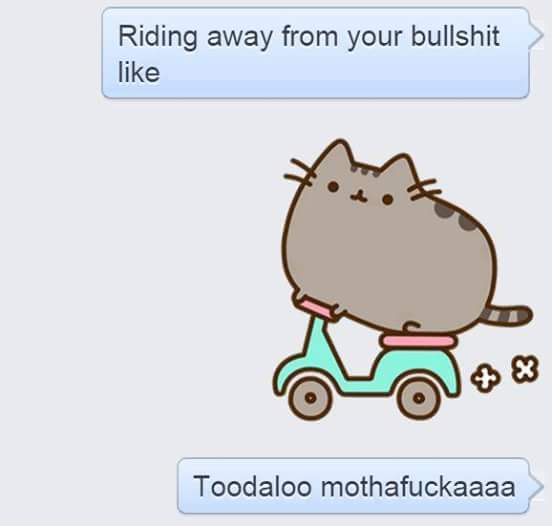
CaptureI don’t write this blog as a direct address to my siblings, but in this case I’ll make an exception.

Seriously, you went to the trouble of setting up an anonymous email just so you could, in effect, go, “nyah nyah, I’ll show you!”  LOL.

I know that on some level, probably the only conscious one, you will claim that you are “just wishing me happy birthday!”

Here’s a hint:  genuine, sincere birthday greetings are not sent from behind a wall of anonymity, and do not include “damn”.  No, what this is is one-upmanship, and cowardly one-upmanship at that.  It’s still harassment, and you’re still an asshole for doing it, even (especially) without attaching your own name to it and having the guts to own it.

Frankly, I’d love to see you admit to and be proud of that act in front of an actual adult — say for instance, a peer, or a boss, or even a mental health professional — instead of the family echo chamber that you all immediately turn to in order to validate each other.

It’s also cute to note that this actually circumvents all those reasons he gave that made it OK for him to do because it’s “easy” for me to ignore it:  I could block his email, right?  Except that he didn’t use it, so I can’t.

But the very best part of this is that this is the brother who once upon a time sent me an email that said that he was “happy to converse with me on almost any other subject”, but that he “refused to further discuss the family break” with me any more.

In case you missed it, that would be a boundary which he set and which he fully expects me to honor.

I wonder how pissed he’d be if I ignored his wishes, decided I KNEW BETTER, and emailed or called him up a couple of times a year and INSISTED on bringing up the subject?

His boundaries are absolutely supposed to be honored, but not mine.

This is why I’m gone.  Call me when you grow up a little and you can act as respectfully towards me as you expect me to act towards you.

Believe me, I’m not holding my breath.

One Person Who Really Cares

I never know what’s going to inspire me to write a new post here.  Today, it’s this article from the BBC.

While I can’t relate to the economics that the author experienced, I can relate to this:

“My parents split up when I was young, but I grew up in a loving home. My mother taught me to read and write before I went to school.”

Except it was my father and my older brother Joe who taught me to read and write before I went to school.  My mother was not interested, or “too busy” or something.

I can relate to the author’s sensitivity, too.  I’ve read about the orchid/dandelion theory before, which also ties in with HSP theory, and I’m fairly certain I’m an orchid/HSP.  (Interestingly, DH also seems to be an HSP, but he is an HSS as well.)

But what has really resonated with me is this:

“Angie Hart from the University of Brighton is a child and family psychotherapist who studies resilience. She stresses the vitalness of the support of at least one person who really cares in helping us to make changes.”

And this:

“The MP Frank Field… suggests parenting is “more important than income or schooling” in improving life chances. He stresses the role of mothers, in particular, in shaping their children’s future… the nurture I experienced in my early years impacted on my later life…in terms of who I am…”

It’s safe to say I never had the “universal” nurturing mother’s love — and you can’t miss what you’ve never had.  But that “vital person who really cares” — I lost that.

I did have a nurturing father who was at home during my childhood, instead of traveling for work.  I had that one vital person who really cared.

I used to think that I had a few more, in my older siblings.

I found one in my husband, although at the time of Dad’s death our marriage was less than 4 years old, and our relationship then was not one I counted on as much as the ones that had been around so much longer.

Then I lost my father, and then my siblings, and now DH is the only one I have left.


I always knew I would lose my dad early.  It was apparent to me from early childhood.  There was an occasion when Dad took me on some kind of riverboat cruise thing on the Missouri River.  It was a beautiful Sunday evening.  I was probably about 5 or so.

At one point, Dad sat me up on the railing and was holding on to me.  I remember the breeze in my face, and his strong arms around me, and I felt happy and completely safe.

Then the boat captain made an announcement over the loudspeaker, of all things.

“Grandpa, we know you love your little girl…” was all I heard — I can actually still hear it when I think about it.  The rest of the announcement was lost to me, but it was about how Dad needed to take me off the railing for safety reasons.

I was embarrassed, I think — what a stupid, tactless, public way to correct someone.

But I cried inconsolably, and for a completely different reason.  Everyone thought I was upset at not being able to sit on the railing, or maybe because of the embarrassment of the public chastising, or of having my father mistaken for my grandfather.

I probably couldn’t even put it into words that day, but the reason I was crying was yes, because they had called him my “grandpa” — but not because it was humiliating that they got it wrong.  It was because it crystallized something important about my Dad.

I already knew he was older than everyone else’s dad.  That was obvious.

But what I knew right then and there about grandpas, was that GRANDPAS DIED.

I believe I had a classmate whose grandfather had died, and even at 5YO I was able to put two and two together.

And that fear stayed with me the rest of my life, until it finally happened.

I’m not sure I ever did explain to Dad just what it was that long-ago day that had me so upset.  I do know that just after he was diagnosed with cancer, I visited him for a couple of weeks, and one night I was so upset, I went into his room and woke him up and cried all over him because he was going to die, he was going to leave, and I was only barely 30 and I felt the same way I felt when I was 5.

He replied gruffly, “Nobody’s dying yet,” to which I said, “Yes, but you will some day,” and he didn’t have an answer to that.  So he just hugged me and let me cry.  And in less than a year, he was gone.


So I lost my dad — my one vital, nurturing, loving parent — after barely 3 decades.

And in the same weekend, really, I lost almost all the other people who I thought really cared.  The ones who said, “This is going to be tough, so we’ll all cut each other some slack.”  The ones who said, “She’s the one who is going to take it the hardest.”

The bitter fact is that these people whom I had known all my life, the ones I would go to if I ever needed help, the ones who at least called on birthdays and Christmas and signed things “love” — didn’t.

Hell, some of them signed some very nasty emails with that word.  LOVE.  What a shitty lie to tell for so long, to a kid sister who implicitly believes her older brothers and sister, and who is dumb enough to believe it means something strong enough to matter.

Or maybe we have different definitions and expectations of what it means, because of the different ways in which we grew up.

To this day it’s hard for me to type it.  I find it a hard word to use casually, even among close friends or with my husband.  I stopped signing “love” on family communications quite some time ago, once I realized how hollow and meaningless it was in that context.  It was just the word you were supposed to use when signing things to certain people.  Automatic.  Nothing really behind it.  As I found out that weekend.

I thought I had a handful of people who really cared about me — and then I found out I didn’t.  That’s what’s been so painful.  It calls into question a lot about yourself.  If all these people who have known me since my very first day don’t really love me, then the common factor is me, and it must have something to do with me.  What did I do?  How unlovable am I?

Of course, that is the scapegoat talking.

Well, as I now know, after years of asking questions and finding facts and working with professionals and facing up to some ugly truths — I didn’t do anything to earn that betrayal.  And the common factor is not me, but a pair of women whose narcissism has poisoned our whole family.

I was never so relieved as when I found out there were words for the role I had been given, for how toxic our mother had been, for what had happened in our family.

And then, of course, I got angry.  Very angry.  Because I had been lied to for so long and made to feel so bad for so long, FOR NO DECENT REASON EXCEPT TO MAKE OTHER PEOPLE FEEL BETTER — and if you want proof of a lack of love, there it is.

Maybe the clue lies in when it all came out — when our father died.  The “only” thing I did differently from my siblings with respect to our father is, I loved him as unconditionally as he loved me.

You’d think this score would be settled by the fact that they all apparently had our mother’s love, where I most certainly did not.  I could clearly tell there was a difference between the way my mother and my father acted towards me by the age of 6, during the divorce proceedings, when I explained all the ways my Dad took care of me and my mother did not.

Of course, knowing what I know now about our mother and her version of love — yeah, I got the love of the one vital person who really cared.

And perhaps because they had a flawed model of what love is, maybe they never really learned what love is like when it’s real, or what you’re supposed to do — what you genuinely WANT to do — for someone you really love.

When I think about a mother’s love and what I missed out on, what was denied me, I never — NEVER — think about it in terms of my own mother and my siblings.  If I’m honest, I’m not actually jealous of them.

No, the times when I feel that burning jealousy is when I see it in other mothers:  thinking back to mothers of friends that I knew, or sometimes seeing complete strangers at the grocery store laughing, joking, and hugging with their kids.

And if I had to choose between my Dad, and what’s happened since he died, I’d still choose my Dad.  His love was real and true, even if I didn’t have it for very long.


The funny thing is, the very first professional I ever spoke to about all this hit this nail on the head right away.  I have mentioned two therapists that I worked with for months at a time — there was one other, a man whose name I have forgotten and to whom I still owe the paperwork for that one and only appointment, for which I still feel bad that he probably never got paid.  (I was supposed to go back but I didn’t.  In retrospect, I think it was too much for me at that point, and I was not ready to confront the reality of how shitty my family had been to me at the most vulnerable time of my life.  I was not capable of facing up to having lost almost everything all at once.)

In late 2001, a few months after our parents’ deaths, I was severely stressed about the whole family situation and was on antidepressants.  My oldest brother was getting married that fall and I was considering not going to the wedding.  I can’t remember if it was my GP or my gynecologist who sent me to a therapist, after I probably fell apart during a routine exam, and described what was going on in my personal life.

I don’t remember much of what was said.  I do know I cried a lot.  The only thing I can remember is that after I probably asked something like, “but what would I say?” I can still hear him saying, “Why not just say:

“Dad and I loved each other, and I wouldn’t trade that for anything.”

We went to the wedding.  Of course no one talked about the elephant in the room, the shitty behavior of Joe and Susan a few months before, so I don’t know why I was even worried about “what I would say” in the event the subject came up.

I even did a reading, and when my new SIL thanked me for it she said she had never heard it read so meaningfully as when I read it.

It’s stunning to read it now.

We are supposed to have put the ways of childhood behind us.  The reasoning of children, who believe what they are told by the toxic adults in their lives, is supposed to give way to the reasoning of adults.

Completeness — as in giving credence to both sides of the story — is supposed to supplant partiality, both in my story and in our parents’ story.

Love is supposed to delight in the truth, yet my siblings insist on supporting the lies that allow the dysfunction to continue, year after year.  Love does not dishonor others, as Susan and Joe did to me.  And love is supposed to protect, not attack.

It’s all spelled out in a book that they all believe in — or say they do — perhaps that’s about as truthful as when they used to say they loved me.


1 Corinthians 13:4-13

Love is patient, love is kind. It does not envy, it does not boast, it is not proud. It does not dishonor others, it is not self-seeking, it is not easily angered, it keeps no record of wrongs. Love does not delight in evil but rejoices with the truth. It always protects, always trusts, always hopes, always perseveres.

Love never fails. But where there are prophecies, they will cease; where there are tongues, they will be stilled; where there is knowledge, it will pass away. For we know in part and we prophesy in part, 10 but when completeness comes, what is in part disappears. 11 When I was a child, I talked like a child, I thought like a child, I reasoned like a child. When I became a man, I put the ways of childhood behind me. 12 For now we see only a reflection as in a mirror; then we shall see face to face. Now I know in part; then I shall know fully, even as I am fully known.

13 And now these three remain: faith, hope and love. But the greatest of these is love.

Toxic People

Notes from this article.

Why do toxic people do toxic things?

Toxic people thrive on control… the type that keeps people small and diminished.

Everything they do is to keep people small and manageable… criticism, judgement, oppression – whatever it takes to keep someone in their place. The more you try to step out of ‘your place’, the more a toxic person will call on toxic behaviour to bring you back and squash you into the tiny box they believe you belong in.

…at the heart of their behaviour is the lack of concern around their impact on others. They come with a critical failure to see past their own needs and wants.

Even the strongest people… are likely to evolve into someone who is a smaller, less confident, more wounded version of the person they used to be.

Non-toxic people will strive to make the relationship work and when they do, the toxic person has exactly what he or she wants – control.

…we hang on to the belief that we have to stay connected and loyal, even though being with them hurts…When loyalty comes with a diminishing of the self, it’s not loyalty, it’s submission.

Why are toxic relationships so destructive?

…Healthy people welcome the support and growth of the people they love, even if it means having to change a little to accommodate…

healthy families and relationships will work through the tough stuff. Unhealthy ones will blame, manipulate and lie – whatever they have to do to return things to the way they’ve always been, with the toxic person in control.

Toxic Relationships – Why they will never change

Reasonable people, however strong and independently minded they are, can easily be drawn into thinking that if they could find the switch, do less, do more, manage it, tweak it, that the relationship will be okay. The cold truth is that if anything was going to be different it would have happened by now.

Toxic people can change, but it’s highly unlikely. What is certain is that nothing anyone else does can change them. It is likely there will be broken people, broken hearts and broken relationships around them – but the carnage will always be explained away as someone else’s fault. There will be no remorse, regret or insight.

If you try to leave a toxic person, things might get worse before they get better – but they will always get better. Always.

Few things will ramp up feelings of insecurity or a need for control more than when someone questions familiar, old behaviour, or tries to break away from old, established patterns… when something feels as though it’s changing, they will use even more of their typical toxic behaviour to bring the relationship (or the person) back to a state that feels acceptable.

…For a toxic family or toxic relationships, that shape is rigid and unyielding. There is no flexibility, no bending, and no room for growth. Everyone has a clearly defined space and for some, that space will be small and heavily boxed. When one person starts to break out of the shape… toxic people will do whatever it takes to restore the space to the way it was. Often, that will mean crumpling the ones who are changing so they fit their space again.

Sometimes toxic people will hide behind the defence that…what they do is ‘no big deal’ and that you’re the one causing the trouble because you’re just too sensitive, too serious… too ‘whatever’…

If it hurts, it’s hurtful. Full stop.

Love never holds people back from growing. It doesn’t diminish, and it doesn’t contaminate. If someone loves you, it feels like love. It feels supportive and nurturing and life-giving. If it doesn’t do this, it’s not love. It’s self-serving crap designed to keep you tethered and bound to someone else’s idea of how you should be.

There is no such thing as a perfect relationship, but a healthy one is a tolerant, loving, accepting, responsive one.

The one truth that matters.

If it feels like growth or something that will nourish you, follow that. It might mean walking away from people you care about… the door left open for when they are able to meet you closer to your terms – ones that don’t break you.

Set the boundaries… and leave it to the toxic person to decide which side of that boundary they want to stand on… If the relationship ends, it’s not because of your lack of love or loyalty, but because the toxic person chose not to treat you in the way you deserve. Their choice.

The choice to trample over what you need means they are choosing not to be with you. It doesn’t mean you are excluding them from your life.

Toxic people also have their conditions of relationship… they are likely to include an expectation that you will tolerate ridicule, judgement, criticism, oppression, lying, manipulation – whatever they do. No relationship is worth that…

… Sometimes choosing health and wholeness means stepping bravely away from that which would see your spirit broken and malnourished.

The growth

Walking away from a toxic relationship isn’t easy, but it is always brave and always strong. It is always okay. And it is always – always – worth it.

…Letting go will likely come with… anger and grief for the family… you thought you hadKeep moving forward and let every hurtful, small-hearted thing they say or do fuel your step.

…keep the door open on your terms, for whenever they are ready to treat you with love, respect and kindness. This is one of the hardest lessons but one of the most life-giving and courageous ones.

The Winner

Quoted section lifted from here.

“Narcissists do know wrong from right. If they didn’t, they wouldn’t hide their unfair actions like they frequently do… they will attempt to hide [or excuse] the fact that they’ve done it. This is because they do know it’s wrong, and they don’t want to lose the admiration and respect of others who will think less of them for having done so.

“So… [narcissists] do what they know is wrong… Then, because they are aware that what they did is wrong and that people will think less of them for it, they cover it up so they won’t have to pay the consequences. (Narcissists don’t like consequences. Those are for little people.)

“…because they are aware it’s wrong and that it makes them wrong, they cover it up and (perhaps sometimes unconsciously) deny it, gaslighting and projecting their way out of responsibility so that nobody, including themselves, will see them as imperfect for having done it. (And if you see them as imperfect, then you’re a serious problem, because as long as you’re there to remind them they’re not perfect, they’ll have to think about the concept, and they just plain won’t.)

“They know what wrong is, and they may do it, but they cannot accept the concept of being a person who does anything wrong, because that means they’re not superior and perfect. So narcissists vehemently push away the information that they’ve done something hurtful. They do know what a hurtful act is, and yet they have to deny that they did it.

“Narcissists use a number of different ways to deny their hurtful actions (and to try making you deny it along with them so you’ll stop complaining). Blaming others, gaslighting, labeling someone who complains about them cruel, lying, making excuses, and playing the martyr are a narcissist’s typical responses. Whatever it takes to stop all recognition (by them and you) of the fact that they were inconsiderate can be expected.

“So yes, narcissists are aware that they’ve hurt your feelings and that it’s wrong, but they just cannot accept that knowledge. They deny it to prevent narcissistic injury, and desperately want you to deny it as well. And usually, they deny it so quickly and so habitually that it doesn’t even register in their consciousness before the excuses and protests are given out.

“Typically, when told they’ve hurt your feelings, a narcissist’s denial takes the forms of insisting you’re not hurt, or that you shouldn’t be hurt, that you’re wrong to be hurt, that they didn’t hurt you, that you’re too easily hurt, and that you shouldn’t complain because they’re hurt worse.”


Guess what.  I still got hurt.

Regardless of what everyone in my “family” would like to pretend, the fact is, at a time of my obvious vulnerability and grief, Susan was deliberately rude to me and hurt me.  And Joe helped her do everything in bold above, afterwards.  Neither has ever acknowledged this, nor apologized for their actions.

It’s crystal clear what the problem is and who it is.  This dysfunctional pattern is well-known and documented and factual.  Anyone who can read my story and possesses a shred of honesty ought to be able to see this is true.  And not just through my words, but also the blogs, books, and articles I cite, and the countless others that exist.

But although I’ve asked time and again for this “family” to do the right thing, the healthy thing, and step up and defend me against this dysfunctional bullshit — they have not.  They will not.  Because it’s also the hard thing.

So I’ve left.  My sister and Susan are both much happier to have me gone, because now they don’t have to be reminded of what I stand for.  Everyone else is OK with it, because it means not dealing with the fits that would be thrown if Joe and Susan were forced to be responsible for their actions.

In Susan’s case, what I stand for is of course the fact of her bad behavior and imperfection.  Though it has been vehemently denied and covered up and the blame has been shifted, I still dared to expose her true nature, and I will never, ever be allowed to get away with that.

In my sister’s case, the waters are murkier.  I stand for something in her mind — I’m not sure exactly what — but it revolves around our parents.

The simplest explanation may be that I stand for the same thing as regards our mother, as I do for Susan — the fact of her imperfection and failings — and my sister is so enmeshed with our mother that she is forever bound to defend her (and for that matter, Susan).

(She’s passed that idea on, too.  I’ll never forget the email exchange I had with one of her daughters, my niece, after I sent my email saying I wasn’t ever coming to the reunions again.  My niece said her first impulse was to “defend her mother”.  After a week or so of puzzling over it I wrote back and asked her, “defend your mother against what?”  She didn’t really have an answer, other than that it was a knee-jerk reaction, and she didn’t want to talk about it any more.)

I’m honestly happier to be gone too, for the most part.  But I’d be lying if I said the whole thing didn’t still rankle and sometimes, hurt.

It seems so unfair for them to all get exactly what they want out of the situation, while I’m the one who has to make the hard choice, to give up and leave, to miss out on having a family, to forever break off all contact with some people I care about in order to save myself from the ones who don’t care about me.

There are some people I would love to be in touch with, to see occasionally, some great-nieces and nephews I’ll never know.  I’m forced to miss out on all that, because to do that would inevitably mean hearing about and seeing and interacting with a handful who continually reject me, ignore me, attack me, hate me.

(Also, my sister and Susan are the two who are in charge of the “family” and my sister, at least, definitely dictates to those under her aegis where they can go and who they can call.  If it got out that one of my nieces or nephews emailed me, for example, I can imagine what a fit my sister would throw and she’d probably insist on reading the exchange, as she’s done before.  Her kids are hovering around 30YO, by the way.  It ought to be their choice whether they want to be in contact with me or not.  Can you say, lack of appropriate boundaries?)

Life isn’t fair, of course, but for a long, long time I really thought my “family” was better than this.

I can take some comfort in the fact that I have the strength and the knowledge and the guts to do what I needed to do, but I should never have had to do it in the first place, and I shouldn’t have to miss out on the ones that I love, and who, I assume, used to love me.  Probably that’s been tainted by now, but what used to be is still something I’ve lost.

Me paying the price for the actions of the fucked-up ones, and giving up my family — knowing that she thinks she’s won — and that she basically has won, if the “family” is the prize — is really, really hard.


My dad liked Bobby Bare and this is the version of the song I remember.  It was played on road trips and in our kitchen.  We sang along, and I still know all the words by heart, from sheer repetition.  Maybe my dad found in this song what I am seeing in it today – that there are worse things than “losing”, if what you “win” isn’t worth having.

And each morning when I wake and touch this scar across my face
It reminds me of all I got by bein’ a winner.

But that woman she gets uglier and she gets meaner every day
But I got her boy, that’s what makes me a winner.

And if there’s somethin’ that you gotta gain or prove by winnin’ some silly fight
Well okay, I quit, I lose, you’re the winner.

But my eyes still see and my nose still works and my teeth’re still in my mouth
And you know I guess that makes me the winner…